ORNAMENT IS NOT DECORATION.

IT IS A SYSTEM THAT ORGANIZES BEHAVIOR.

Schwarz-weiß-cartoonartige Zeichnung verschiedener Begriffe und Symbole in Bezug auf Portugal, Italien, Frankreich, Spanien und England, einschließlich Landkarten, Flaggen, bekannten Wahrzeichen und deutschsprachigen Bezeichnungen.

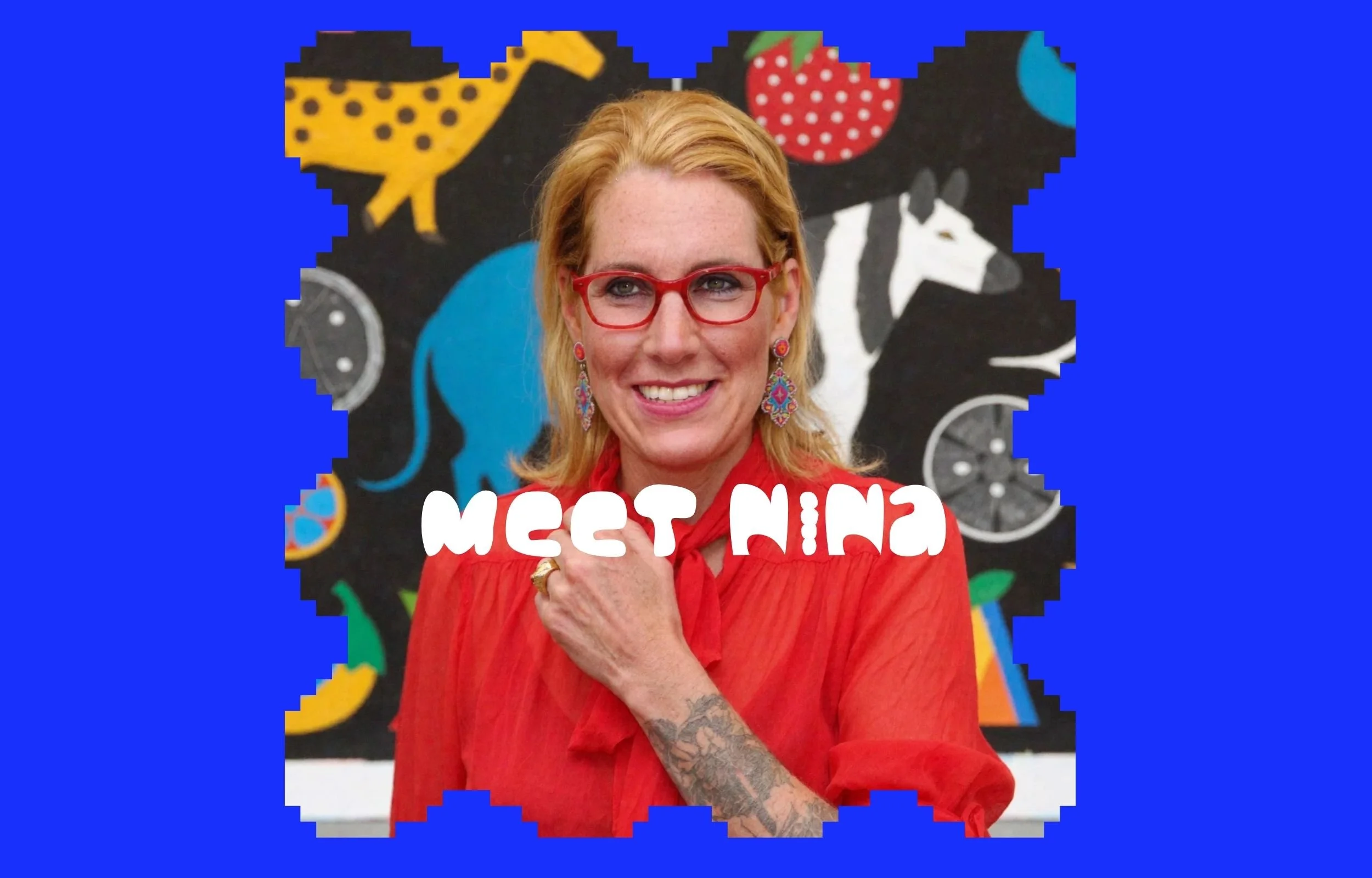
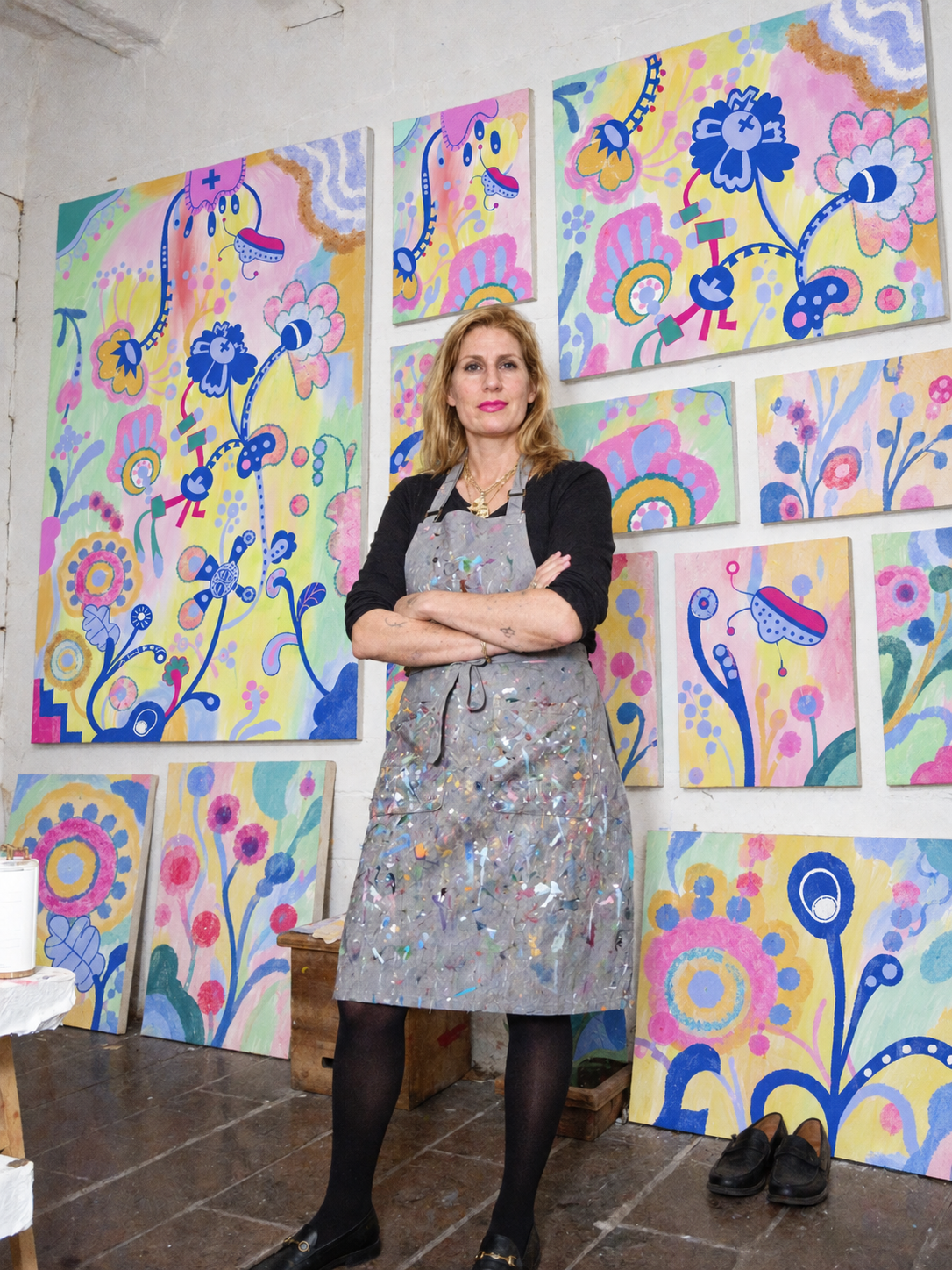
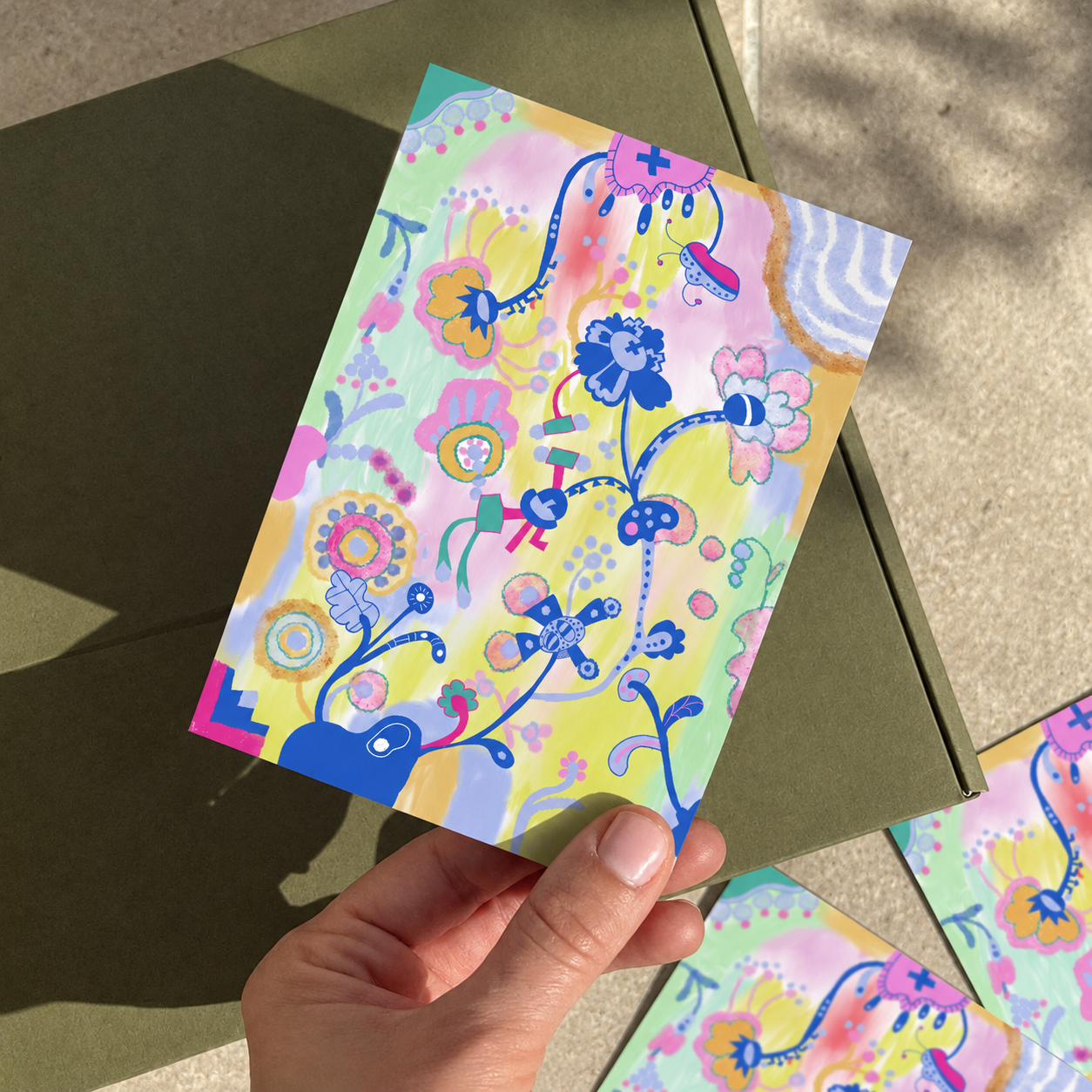
Nina Schrödl is an Austrian artist whose work investigates ornament and surface as structures of power, repetition, and disappearance within domestic and public space.

Surface Systems

  • Automotive surface intervention

    Hand-drawn ornament applied to an automobile, reframing the vehicle as a mobile spatial surface rather than a branded object.

    Vehicle surface intervention using hand-drawn ornamental pattern applied across automotive body panels.
  • Interior Surface System

    Ceramic cups fitted with Barbie doll legs transform a familiar domestic object into a fragile, gendered body. The work stages an imbalance between care and power, revealing how everyday design embeds systems of domination, consumption, and the illusion of progress.

    Close-up of a tufted sofa upholstered in a grey fabric with a repeating ornamental floral pattern.
  • Untitled (Barbie Legs Cups)

    By attaching Barbie doll legs to ceramic cups, the work exposes the gendered power structures embedded in everyday domestic objects. Ornament and function collapse into a fragile system where consumption, control, and progress reveal their instability.

    Ceramic cups connected by Barbie doll legs, arranged in a line on a neutral surface, transforming domestic vessels into fragile, body-like forms.
  • Ornament is not decoration. It is a system that organizes behavior.

  • Domestic space is a designed system. Ornament is one of its tools.

  • Ornament as infrastructure.

  • Through repetition, ornament becomes structure.

  • Ein älterer Mann und eine junge Frau sitzen auf einem pinken Sofa in einem Raum mit pastellfarbenem, verspieltem Dekor. Der Mann trägt einen pinken Anzug mit goldverzierten Mustern, die Frau trägt einen pinken, glitzernden Blazer mit ähnlichen Verzierungen und hält ein Smartphone in der Hand.

    Ornament is never neutral, it carries intention, Memory and Power.

  • Eine Person sitzt auf einem rosa, gepolsterten Sofa in einem prunkvollen, pinkfarbenen Raum. Der Raum ist dekoriert mit zahlreichen Blumenbildern, großen Pflanzen und antiken Möbeln mit floralen Mustern.

    Pink lures girls into the prison of the housewife.

  • Eine Frau in einem bunten, gemusterten Kleid sitzt auf einem gelben Sofa vor einer pinken Wand mit bunten, abstrakten Kunstwerken und Tiermotiven.

    Mentors are my lucid dreams to visibility

  • Ein Mann und eine Frau stehen in einem Raum mit pinken und blumigen Wandmustern. Der Mann trägt einen lilafarbenen Anzug und eine bunte Bluse, die Frau trägt ein blaues Kleid mit Blumenmuster, sie hat eine Hand auf der Stirn. Hintergrund: Gemälde und große Fenster, alle Wände sind mit großen bunten Blumen dekoriert.

    Ornament is information, not excess.

  • Bunter, detaillierter Collage mit Blumen, Tieren, menschlichen Gesichtern, Menschen in verschiedenen Posen, Tieren wie Tigern, Vögeln, und Illustrationen im Stil von Pop-Art

    Self-portraits as a strategy to make the silenced woman visible.

  • Innenansicht eines Autos mit floraler Tapete und Bezügen auf den Sitzen, eine Person fährt, während sie ein Handy benutzt, Blick auf die Straße mit Bäumen und Himmel.

    Pattern organizes attention long before it pleases the eye.

Junge Frau trägt eine pinke Jacke mit bunten, aufwendigen Stickereien, die Figuren, Herzen und andere bunte Muster zeigen.

Nina Schrödl is an Austrian artist working with ornament, pattern, and surface as cultural systems—investigating how decoration operates as a structure of power, repetition, and disappearance in domestic and public space.

Frau sitzt auf einem pinken, blumigen Sofa vor einer bunten, gemusterten Wand mit Blumen- und Mustermotiven, umgeben von bunten Gardinen.